This post was inspired by an article Read This Before You Buy That TV Streaming Stick published on KrebsOnSecurity.
Brian Krebs, the cybersecurity researcher behind KrebsOnSecurity, has spent years tracking the hidden risks of cheap and unofficial streaming devices. In his latest article, he explains how some TV streaming sticks and boxes marketed as bargain entertainment options can quietly expose users to security and privacy threats far beyond streaming itself.
Streaming devices can be convenient, but not all of them are equally safe. Some low-cost, off-brand TV sticks and boxes come with hidden software, weak security, and dubious business models that can put your home network and personal data at risk.
The main risk
The biggest concern is not just poor performance or illegal content. Krebs on Security reports that certain generic streaming devices may quietly rent out your internet connection to strangers through residential proxy software, while also being used in ad-fraud operations that spoof mobile devices and click ads on fake sites.
That means a device you bought for entertainment could be used for traffic you never approved. In practice, that can create security, privacy, and abuse issues for the household using it.
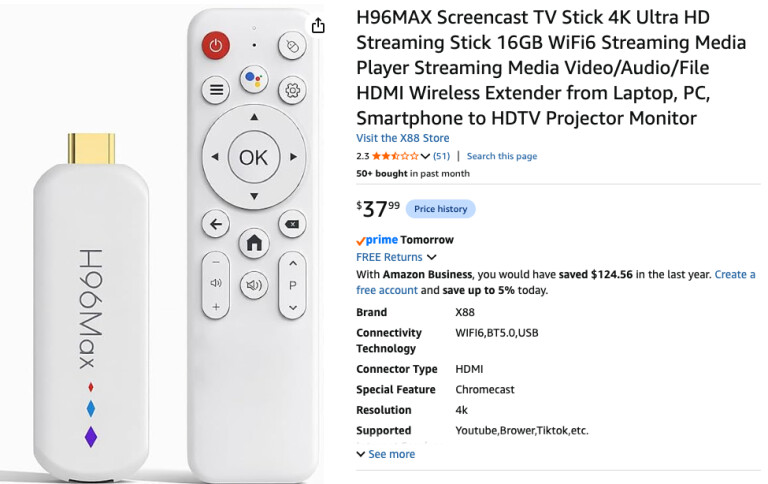
Image: An H96 TV streaming device currently advertised for sale on Amazon. Source: KrebsOnSecurity
What to avoid
A streaming device should raise suspicion if it:
- Promises unlimited content for a one-time fee.
- Comes from an unknown or gray-market brand.
- Requires unofficial apps or side-loading to work properly.
- Ships with no clear support, update policy, or certification.
Devices like this are often difficult to trust because they may be insecure by default and may not receive meaningful security updates.
What to look for instead
A safer choice is a name-brand device from a reputable manufacturer. Krebs notes that buyers should stick with reputable hardware and be careful about which apps they install, since even some apps can bundle residential proxy software.
When comparing devices, check for:
- Official certification.
- Clear software update support.
- Access to the apps you actually use.
- A known manufacturer with a real support channel.
A simple buyer rule
If the product depends on shady software to look like a great deal, it is probably not a good deal. The safest approach is to buy a legitimate streaming device, keep its software updated, and only install apps you recognise and trust.
Recommended podcast: E172: Superbox by DarknetDiaries

Image source: DarknetDiaries
Bottom line
A streaming stick is not just a media accessory; it is a networked device inside your home. Krebs’ reporting is a reminder that bargain hardware can carry hidden online safety risks, especially when it comes from the gray market and promises more than it should.
Read the full article on KrebsonSecurity.